Insurance Claim Assistance in Chicago, IL
Chicago Roofing Team handles insurance claim documentation from start to finish—we inspect storm damage, prepare Xactimate scope reports, and work directly with your adjuster to maximize your settlement. When hail, wind, or ice damage hits your roof, we document every defect with HAAG-certified inspectors and drone photos so your insurance claim includes what you deserve. Call 312-313-3253 for a free claim evaluation.
Call 3123133253What Insurance Claim Assistance Means
When a storm hits your Chicago roof—whether wind damage, hail, or ice dam formation—filing an insurance claim fast is critical. Chicago Roofing Team handles the entire claim documentation process, working directly with your adjuster to document damage, file supplements, and recover full replacement costs. We prepare detailed roof inspection reports, high-resolution drone photo packages, and Xactimate scope documentation so your insurer sees exactly what needs repair.
Why Storm Damage Claims Get Missed
Insurance adjusters process dozens of claims daily. They may miss hidden damage to your roof deck, underlayment deterioration, or flashing failures if the inspection isn't thorough. We bring HAAG-certified inspectors and drone technology to catch what matters. Our claim documentation captures every shingle defect, granule loss, and structural issue—turning missed damage into recovered dollars.
Our Insurance Claim Process
Working with insurance adjusters requires precision. Here's how we handle it:
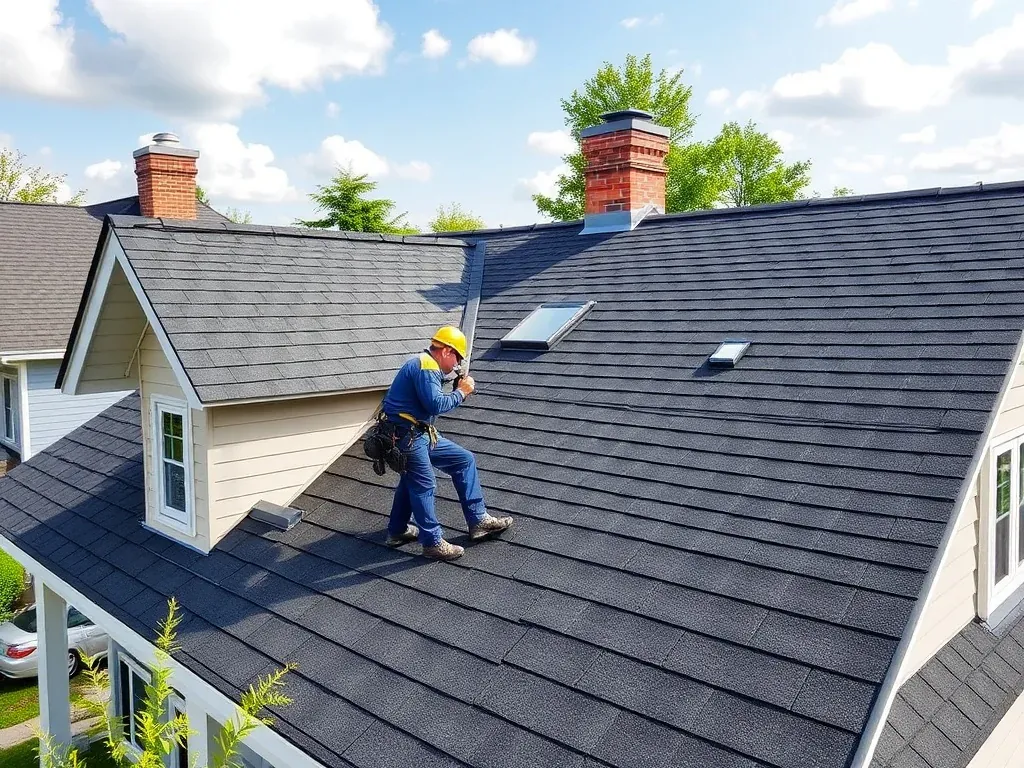
- Initial Roof Inspection & Documentation — We examine your roofline, checking for wind uplift, hail bruising, torn shingles, and compromised flashing. Our HAAG-certified inspectors use high-resolution photography to document every defect. We photograph step flashing, counter-flashing, chimney flashing, ridge cap damage, and valley issues that impact your policy coverage.
- Xactimate Scope Documentation — This industry standard scope details every component that needs repair: asphalt shingle replacement, underlayment restoration, ice-and-water shield installation, drip edge replacement, and gutter repair. The adjuster uses this to calculate your claim settlement.
- Supplement Preparation — Most initial adjuster estimates undervalue repairs. After the initial inspection, we file supplemental claims documenting overlooked damage like roof deck rot, structural deterioration, or compromised rafter systems that only appear during tear-off. Supplements often recover $5,000–$15,000 in additional coverage.
- Depreciation Recovery — Insurance policies deduct depreciation from replacement cost, reducing your settlement. We negotiate proof of loss documentation to recover this gap, ensuring you're not paying thousands out of pocket.
- Claim Deadline Management — Your policy has strict filing deadlines. We track proof of loss dates, adjuster deadlines, and state claim requirements so nothing expires.
What We Document During Inspection
Our roof inspection captures damage across all components: asphalt shingles, three-tab shingles, architectural shingles, and wood shakes; underlayment and synthetic underlayment; felt and tar paper; flashing systems including step flashing, counter-flashing, pipe flashing, pipe boot, vent boot, and chimney flashing; roof deck condition; structural issues like rot, decay, or settling; ventilation including soffit vent and ridge vent failures; and perimeter components like fascia, rake, eave, and gutter damage.
Handling Wind Damage Claims
Chicago wind storms cause widespread roof damage. We document lifted shingles from wind uplift, nail head exposure indicating fastener failure, missing shingles especially at ridge caps and valleys, flashing separation and fastener pullout, gutter damage and downspout destruction, and chimney flashing compromise. Wind damage claims require photographic evidence of uplift patterns across the roof.
Handling Hail Damage Documentation
Hail leaves bruises on asphalt shingles that insurance covers if documented correctly. Our inspections capture shingle denting and bruising patterns, granule loss acceleration from impact, ridge cap damage, vent boot punctures, metal panel denting (if metal roofing), and flashing bent areas. ITEL shingle sampling can prove hail impact when photos alone are contested.
Handling Ice Dam Claims
Chicago winters create ice dams along the eave—trapped water that seeps through shingles into the attic. We document ice-and-water shield installation gaps, drip edge problems, attic ventilation failures that caused the dam, interior water damage (which extends the claim scope), and fascia rot from prolonged moisture exposure. Ice dam claims often qualify for mitigation coverage, including temporary tarps during the repair process.
Materials Typically Covered in Claims
Your claim usually covers reinstallation of asphalt shingles or premium shingle grades, underlayment (synthetic is standard; tar paper if matching existing), ice-and-water shield (required in valleys and eaves), step flashing and counter-flashing, chimney flashing and pipe flashing, drip edge on all edges, ridge cap shingles, sealant and roof cement where needed, roof deck replacement if plywood or OSB is damaged, and gutter and downspout repairs.
The Deductible Question
Your policy deductible reduces the claim payout. If your deductible is $1,000 and damage totals $8,000, you receive $7,000. We help minimize your out-of-pocket by maximizing the total claim value so deductible is a smaller percentage of recovery, filing supplements to increase settlements, and documenting interior water damage (often has separate deductibles).
Chicago Climate Challenges
Lake Michigan weather creates unique roof stress. Heavy snow loads, freeze-thaw cycles, hail, and sustained wind all trigger claims. We document how Chicago weather accelerated damage and support your proof of loss claim. This adds credibility to supplement requests. Winter ice dam formation, spring wind storms, and summer hail all require different documentation approaches that we know by experience.
Timeline & Claim Process
Day 1–3: Inspection, photography, initial documentation. Day 4–7: Xactimate scope preparation, insurance submission. Week 2–3: Adjuster inspection (we attend and support your position). Week 3–4: Initial settlement offer, supplement preparation. Week 5–8: Supplement filing, negotiation, supplemental adjuster visit. Week 8+: Final approval, repair scheduling, mitigation setup if needed.
What's Included in Our Insurance Claim Service
- HAAG-certified roof inspection with detailed damage documentation
- High-resolution drone photo packages of all roof damage
- Xactimate scope documentation prepared for insurance submission
- Supplement preparation and filing (typically 1–2 supplements per claim)
- Adjuster meeting attendance and damage verification support
- Proof of loss analysis and depreciation recovery negotiation
- Insurance policy review and claim deadline tracking
- Licensed and insured repair workmanship once claim is approved
Getting the Full Recovery
Storm damage claims often settle 20–40% below actual replacement costs if not documented properly. Our claim documentation ensures you recover the maximum. The difference between a basic homeowner claim and a professionally documented one is often $10,000–$20,000. Call Chicago Roofing Team at 312-313-3253 for your free claim evaluation today.
What's Included
- HAAG-certified roof inspection with comprehensive damage documentation and detailed written report
- High-resolution drone photo packages capturing damage from multiple angles
- Xactimate scope documentation in industry-standard format for insurance submission
- Supplement preparation and filing for overlooked damage (typically 1–2 supplements recovering $5,000–$15,000 additional)
- Adjuster meeting attendance with damage verification support and technical explanations
- Proof of loss analysis and depreciation recovery negotiation to maximize replacement cost coverage
- Insurance policy review, claim deadline tracking, and filing deadline management
- Licensed and insured repair workmanship once settlement is approved, including materials and labor warranty
Our Insurance Claim Assistance Process
- Schedule Free Inspection — Call 312-313-3253 or contact us online. We arrange a HAAG-certified inspection within 24–48 hours. Bring your insurance policy details and photos of visible damage.
- Document Damage with Professional Photography — Our inspector examines every component—shingles, underlayment, flashing, ice-and-water shield, ridge cap, fascia, and gutters. We capture damage using high-resolution photos and drone imaging to create a complete damage profile.
- Prepare Xactimate Scope Documentation — We compile all damage into Xactimate format—the industry standard adjusters use. This scope lists every repair needed: shingle replacement, flashing repair, deck restoration, underlayment replacement, and associated labor.
- Submit Initial Claim to Your Insurer — We send the complete documentation package, including our scope, photos, and inspection report. Your insurance company reviews and schedules an adjuster inspection.
- Attend Adjuster Inspection & File Supplements — We meet with the insurance adjuster to verify damage and answer technical questions. After the adjuster's estimate, we file 1–2 supplemental claims for overlooked damage, often recovering $5,000–$15,000 additional coverage.
- Negotiate Settlement & Schedule Repairs — We work with your insurer to minimize depreciation deductions and confirm your settlement includes replacement cost coverage. Once approved, we schedule repairs and coordinate the claim payout with our licensed, insured crew.
Signs You Need Insurance Claim Assistance
Warning Signs Your Roof Needs Insurance Claim Documentation
- Visible granule loss or bald spots on asphalt shingles after a storm—Lake Michigan hail causes severe impact damage
- Lifted or curled shingles along roof edges and ridges, indicating wind uplift damage from Chicago's seasonal storms
- Ice dam formation along the eave in winter, trapping water that seeps through underlayment and causes interior leaks
- Missing shingles, torn shingles, or ridge cap damage, exposing the roof deck to moisture penetration and decay
- Flashing separation, gaps, or separation where the roof meets chimneys, walls, or vents—common failure point in Chicago weather
- Interior ceiling stains, water dripping into the attic, or mold growth, signaling roof membrane failure or ice dam backup
- Sagging roof deck, visible structural settling, or rotted fascia, suggesting damage covered under most homeowner policies
- Gutter damage, downspout denting, or separation after wind storms—often overlooked in initial adjuster estimates
Don't just take our word for it — hear from our satisfied customers.
"My roof took a beating during last year's hail storm. I filed a claim myself, but Chicago Roofing Team found damage I'd missed—the inspector caught flashing separation and roof deck rot that should have been covered. They filed a supplement and recovered an extra $8,300. Saved me thousands." — Marcus T., Wicker Park
"After the ice dam in January, water was dripping into my attic and I had no idea how to document it for insurance. Chicago Roofing Team came out the same day, took drone photos, and prepared the whole scope. My adjuster approved their estimate without pushback. Professional work." — Jennifer W., Lincoln Park
"Wind damage claim seemed straightforward, but the first estimate was way too low. Chicago Roofing Team attended the adjuster meeting with me and pointed out lifted shingles and counter-flashing gaps I'd never noticed. They filed a supplement and got the settlement up by $6,500. Wish I'd called them from the start." — David R., Logan Square
Ready to get started? Call us today at 3123133253 for a free estimate.
Free estimates · Licensed & Insured · 25-year warranty
Call 3123133253