Storm Damage Repair in Chicago, IL
Chicago Roofing Team responds within hours when hail, wind, or ice damage strikes your roof. We tarp exposed areas, document everything for your insurance adjuster, and schedule repairs fast—stopping water intrusion before it spreads into walls and ceilings. Call (312) 313-3253 now for immediate storm damage assessment.
Call 3123133253How Storm Damage Happens
Hail impact creates granule loss on shingles and exposes the asphalt mat underneath. High winds tear off shingles and leave the roof deck—your plywood or OSB substrate—exposed to rain. Ice dams form when freeze-thaw cycles crack flashing and lift shingles, allowing water to seep and wick along your underlayment.
Debris—branches, hail fragments, ice—clogs gutters and downspouts, blocking drainage. Water backs up behind fascia and soffit, then leaks through your eaves into walls and attics. That damage spreads fast if not stopped immediately.
Why Fast Response Matters
Water intrusion accelerates. A single missing shingle or cracked step flashing allows moisture to penetrate your roof deck and rot the substrate beneath. We arrive with tarps for emergency waterproofing while you wait for insurance approval. Our roofers document damage with photographs and measurements, compile itemized estimates listing every material—replacement shingles, underlayment, ice-and-water shield, drip edge, ridge cap, ridge vent, chimney flashing, pipe flashing, and sealant—and coordinate with your insurance adjuster from start to finish.
Storm Damage Repair: What's Included
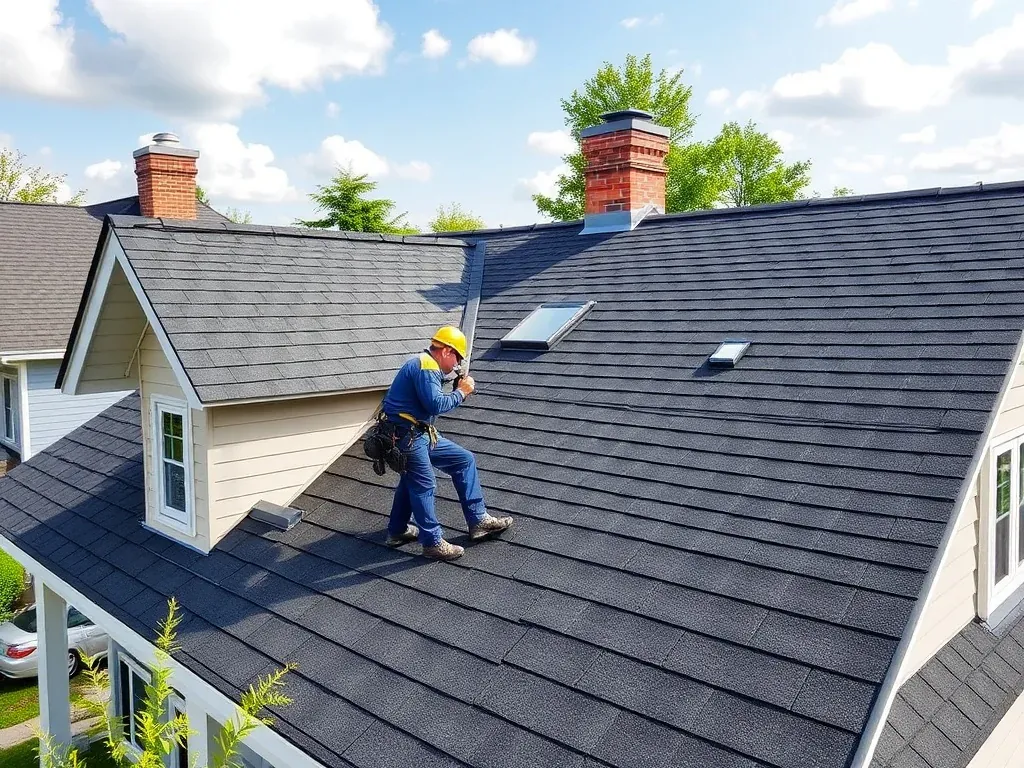
- Rapid damage inspection with roof walk-through, photography, and detailed notes on all affected areas.
- Emergency tarping of exposed roof sections to halt water intrusion during the claims process.
- Debris removal from gutters, downspouts, valleys, and roof surface to restore drainage.
- Insurance documentation including Xactimate reports, proof of loss forms, and adjuster coordination.
- Material sourcing: replacement shingles, ice-and-water shield, synthetic underlayment, sealant, caulk, fasteners, and flashing components matched to your roof type.
- Professional repair execution with tear-off of damaged sections, installation per building code, and final sealed inspection.
- 5-year labor warranty and manufacturer warranty on all materials used in the repair.
Materials & Roofing Methods
We repair and replace all roof material types. Asphalt shingles, architectural shingles, and three-tab shingles are the standard for Chicago residential roofs. For older homes, we work with wood shake, cedar shake, slate, tile, clay tile, and concrete tile. Metal roofs use standing-seam panels or corrugated panels secured with fasteners and sealed with adhesive.
Flat roofs and low-slope roofs use TPO, EPDM, PVC membrane, built-up roof, or modified bitumen systems. Tar and pitch are applied per membrane spec. Synthetic underlayment replaces traditional felt and tar paper because it resists moisture longer. Ice-and-water shield protects valleys and eaves where ice dams form.
Flashing—including step flashing, counter-flashing, chimney flashing, pipe flashing, pipe boots, vent boots, apron flashing, and boot flashing—is resealed or replaced with mastic and roof cement. Drip edge is inspected and replaced if bent or missing. Ridge cap and ridge vent are restored to maintain attic ventilation. Soffit vent and attic fan components are cleaned or replaced.
Vapor barrier and roof coating are applied for added weatherproofing. All work follows Chicago building code requirements for wind uplift resistance (minimum 90 mph design load), fastener spacing, and ventilation.
Tools & Equipment Our Roofers Use
- Scaffolding and ladders for safe access on steep roof pitches and high eaves.
- Safety harnesses required on any slope exceeding 4:12 pitch per building code.
- Roofing square and measurement tools to ensure accurate material layout and starter course alignment.
- Nail gun and air compressor for efficient fastening of shingles, drip edge, and trim with ring-shank nails.
- Pry bar and roofing shovel for safe removal of damaged shingles, underlayment, and decking.
- Torch for heat-welding seams on TPO and EPDM membrane repairs.
- Dumpster rental for safe debris removal from your property.
Warning Signs You Need Storm Damage Repair
- Missing or damaged shingles visible from the ground or roof edge, exposing the substrate or underlayment.
- Water stains on interior ceilings, indicating active seepage through roof deck and decking.
- Granules accumulating in gutters and downspouts—sign of shingle degradation from hail or age.
- Exposed nail heads, flashing seams, or decking visible on the roofline or at valleys.
- Sagging or soft spots in the roof line after heavy wind or snow load.
- Cracked, lifted, or separated flashing around chimneys, skylights, dormers, and pipe boots.
- Debris—leaves, branches, hail fragments—lodged in valleys and gutter runs, blocking water flow.
- Damp or musty odor in the attic, indicating hidden moisture behind soffit or fascia.
The Storm Repair Process: Step by Step
- Same-Day Inspection. We assess damage on roof deck, all flashing (step, chimney, pipe, counter-), ridge and soffit vents, gutter, downspout, fascia, and eave conditions. Photos and measurements are documented. Verbal estimate provided within 24 hours.
- Emergency Tarping. Exposed roof sections are covered with tarps. Gutters and downspouts are cleared of debris to restore drainage. Truss and rafter visibility is checked for structural concerns.
- Insurance Coordination. We file your claim with itemized estimates, obtain adjuster inspection, and file supplemental claims if additional damage is found during tear-off. Permits are secured for replacements exceeding 25% of roof area per building code.
- Material Sourcing. Replacement shingles, synthetic underlayment, ice-and-water shield, flashing (all types), ridge cap, soffit vent, drip edge, sealant, caulk, adhesive, fasteners, mastic, roof cement, vapor barrier, and coating are ordered and delivered.
- Repair Execution. Damaged shingles and underlayment are removed via tear-off method. New synthetic underlayment is laid on plywood or OSB substrate. Starter course and field course shingles are installed with staggered courses. Ridge cap and ridge vent are secured. All flashing is resealed. Soffit, fascia, eave, rake, and verge details are finished. Debris is hauled in dumpster.
- Final Inspection & Cleanup. Roof is walked and inspected for leaks. Insurance adjuster performs final walk-through. Warranty documentation is provided. Property is cleaned and left in good condition.
Materials for Every Roof Type
Chicago homes have diverse roof designs: gable, hip, mansard, and gambrel roofs with varying pitch and complexity. We handle all roof geometries—from simple gables to complex hip roofs with dormers, skylights, and parapets. Structural elements (ridge beam, rafters, joists, trusses, joist bracing) are inspected for wind or hail damage. Architectural features like overhang, canopy, and verge are repaired to code.
Membrane roofs use TPO or EPDM for flexibility, or PVC for durability. Built-up roofs and modified bitumen are re-coated or patched. Tar, pitch, bitumen, felt, and tar paper are applied per the original system spec. Scupper and coping details on parapets are resealed. Anchor points for HVAC and snow guard systems are inspected.
Cost & Insurance for Chicago Homeowners
Partial storm repairs typically cost $2,500–$7,500 depending on damage extent and material choice. Full roof replacement (recommended if over 50% damage) runs $8,000–$15,000+ based on roof size, pitch, and shingle grade. Most homeowner policies cover 100% of repair costs after your deductible (typically $500–$1,000). We manage the entire claims process—from initial assessment through final adjuster approval and supplemental claim filing if hidden damage emerges.
Chicago Weather & Ongoing Storm Risk
Chicago winters bring heavy snow and ice dam formation. Freeze-thaw cycles crack flashing and lift shingles. Spring thunderstorms produce hail and winds exceeding 50 mph. Summer severe weather can spawn baseball-sized hail. Lake Michigan weather patterns create rapid temperature swings and moisture surge. These conditions stress every roof component: shingles, underlayment, flashing, gutters, fascia, soffit, ridge, valleys, and eaves. Annual inspection catches early wear. Quick storm response prevents cascade damage into walls, attics, and ceilings. Call us after any severe weather event—we document everything for your insurance claim.
What's Included
- Emergency tarping and temporary waterproofing to stop active leaks within hours of your call.
- Professional damage inspection with detailed photography, measurements, and written estimate within 24 hours.
- Insurance claim filing including Xactimate documentation, proof of loss forms, and adjuster coordination throughout the repair process.
- Full material replacement: shingles, underlayment, ice-and-water shield, all flashing types, ridge cap, drip edge, soffit vents, sealant, and fasteners matched to your roof spec.
- Professional tear-off and disposal of all damaged materials via dumpster rental.
- Repair execution per Chicago building code with permit filing, structural inspection if needed, and final sealed inspection.
- 5-year labor warranty on all workmanship plus full manufacturer warranty on materials.
- Cleanup and final walkthrough with you and your insurance adjuster before project close.
Our Storm Damage Repair Process
- Same-Day Emergency Response. Call (312) 313-3253 and we dispatch a licensed roofer to assess hail, wind, or ice damage. We photograph all affected areas—roof deck, flashing, shingles, gutters, dormers, skylights, fascia, soffit—and provide a verbal estimate within 24 hours. We identify whether your roof needs tarping, immediate repairs, or full replacement.
- Tarping & Stabilization (24–48 hours). Exposed sections of your roof are covered with heavy tarps to stop water intrusion. Gutters and downspouts are cleared of debris. Temporary bracing is installed if framing is damaged. We photograph and document everything for your insurance file.
- Insurance Claim Filing (24–72 hours). We prepare a detailed line-item estimate listing all materials, labor, and any additional damage found. Xactimate documentation is compiled. We coordinate your insurance adjuster's inspection and answer their questions about building code compliance and material choices. Supplemental claims are filed if hidden damage is discovered.
- Permit & Material Sourcing (3–7 days). For replacements over 25% of roof area, we file permits with the City of Chicago. Replacement shingles, underlayment, ice-and-water shield, flashing, ridge cap, soffit vents, sealant, fasteners, and all components are ordered to match your original roof spec.
- Repair Execution (3–7 days depending on weather and damage scope). Damaged shingles and underlayment are removed via tear-off. Plywood or OSB substrate is inspected for rot or water damage and replaced if necessary. New synthetic underlayment, ice-and-water shield, starter course, and field course shingles are installed per code. All flashing—step, chimney, pipe, counter-—is resealed with mastic and roof cement. Ridge cap, drip edge, and soffit vents are restored. Debris is removed daily and hauled in dumpster at project end.
- Final Inspection & Warranty (1 day). Your roof is walked, checked for leaks, and inspected by the insurance adjuster. We walk the roof with you, explain the work completed, and provide warranty documentation (5-year labor warranty, manufacturer warranty on materials). Your project is closed and paid.
Signs You Need Storm Damage Repair
Warning Signs Your Roof Needs Storm Damage Repair
- Missing or damaged shingles visible from the ground, exposing underlayment or roof deck.
- Water stains on interior ceilings or walls—the clearest sign of active water intrusion through damaged flashing or shingles.
- Granules accumulating in gutters and downspouts after heavy weather—indicates shingle degradation from hail impact or UV.
- Exposed nail heads, decking, or flashing seams visible on your roofline or in valleys.
- Sagging or soft spots in the roof line after wind or heavy snow load—may indicate compromised plywood or truss damage.
- Cracked, lifted, or separated flashing around chimneys, skylights, dormers, and pipe boots where leaks typically start.
- Debris—leaves, branches, hail fragments, ice—lodged in gutters, downspouts, and valleys blocking drainage and trapping moisture.
- Damp or musty smell in the attic or upper closets—hidden moisture seeping behind soffit, fascia, or eave flashing.
Don't just take our word for it — hear from our satisfied customers.
"Hail hit our Wicker Park home and cracked three roof sections. Chicago Roofing Team tarped us the same day, filed the insurance claim, and had us repaired in a week. They explained every step—flashing replacement, new underlayment, everything. Licensed & insured and they showed their work. Highly recommend." — Michael T., Wicker Park
"Ice dam in February caused water to seep into our Lincoln Park attic. One call and they were here within hours to tarp and assess. They coordinated with the adjuster, replaced the step flashing and soffit vents, and installed ice-and-water shield to prevent it next winter. Professional, honest pricing, no surprises." — Sarah M., Lincoln Park
"Our Pilsen roof got torn up by a thunderstorm—missing shingles, damaged ridge cap, broken gutter. Chicago Roofing Team mobilized fast, got us approved by insurance, and completed the repair including new drip edge and valley flashing. They cleaned up every bit of debris. Five-year warranty gave us peace of mind." — David R., Pilsen
Ready to get started? Call us today at 3123133253 for a free estimate.
Free estimates · Licensed & Insured · 25-year warranty
Call 3123133253